Our team investigates fundamental mechanisms and translates findings from bench to bedside, combining preclinical models with clinical insight.
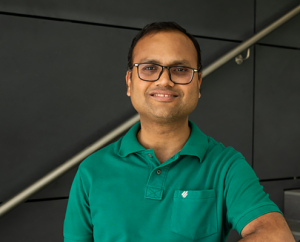
Researcher at ICRC with focus on translational medicine. Combines preclinical insights with clinical practice across cardiology, neurology, and oncology programs.
Currently leads / contributes to interdisciplinary projects bridging molecular biology, imaging, and patient care at St. Anne's University Hospital Brno.
To research various frequency components in the ECG signal and their contribution in clinical practice – spatial and temporal distribution properties in QRS complex on different frequencies using new ultra-high frequency ECG (UHF-ECG) methods and technology.
To analyze EEG high-frequency oscillations (HFOs) and their meaning in physiology and pathophysiology of the epileptic brain.
To research the EEG signal propagation – the brain connectivity in physiology and pathophysiology in epilepsy and Parkinson’s disease.
Research focus
Focuse on the development and testing of new methods and technologies for improved diagnostics for better stratification of heart and brain diseases.
Progressive analyses of weak electrical signals emitted by the body organs through an advanced acquisition of these signals.
We offer high-quality technical engineering services for researchers in terms of biological signals measurement and analyses, as well as the research data management and mining.
Development of new diagnostic technologies and tools in neurology and cardiology.
Technological equipment
HiSeM Laboratories – special labs for highly sensitive biological signals measurement, equipped with Faraday cages and special acquisition systems designed for rooms with a highly clean environment (in terms of electromagnetic interference).
Flexible Labs – full-range laboratories equipped for cardio and neuro diagnostic methods and measurement of biological signals.
Selected Results
Ultra-High-Frequency ECG for the diagnostics of electrical conduction disturbances of the heart ventricles – the new methodology of processing ECG signal. Technology and methodology are covered by US patent and by EU and Czech patent applications.
Machine learning models for localization of epileptogenic tissue – new methodology utilizing various intracranial EEG features in support vector machine models or convolutional neural networks to localize seizure generating tissue. Filed US patent.
Jurak P., Curila K., Leinveber P., Prinzen FW., Viscor I., Plesinger F., Smisek R., Prochazkova R., Osmancik P., Halamek J., Matejkova M., Lipoldova J., Novak M., Panovsky R., Andrla P., Vondra V., Stros P., Vesela J., Herman D.: Novel ultra-high-frequency electrocardiogram tool for the description of the ventricular depolarization pattern before and during cardiac resynchronization. Journal of Cardiovascular Electrophysiology. 2020, 31(1), 300-307.
Halámek J., Leinveber P., Viscor I., Smisek R., Plesinger F., Vondra V., Lipoldova J., Matejkova M., Jurak P.: The relationship between ECG predictors of cardiac resynchronization therapy benefit. 2019, PLoS One, 14(5).
Cimbalnik J., Klimes P., Sladky V., Nejedly P., Jurak P., Pail M., Roman R., Daniel P., Guragain H., Brinkmann B., Brazdil M., and Worrell GA.: Multi-feature localization of epileptic foci from interictal, intracranial EEG. Clin. Neurophysiol., 2019, 130(10), 1945–1953.
Klimes P., Cimbalnik J., Brazdil M., Hall J., Dubeau F., Gotman J., and Frauscher B.: NREM sleep is the state of vigilance that best identifies the epileptogenic zone in the interictal electroencephalogram, Epilepsia, 2019, 60(12), 2404-2415.
Brázdil M., Pail M., Halámek J., Plešinger F., Cimbalnik J., Roman R., Klimeš P., Daniel P., Chrastina J., Brichtova E., Rektor I., Worrell GA., and Jurák P.: Very high frequency oscillations: Novel biomarkers of the epileptogenic zone. Ann. Neurol., 2017, 82(2), 299-310.
Jan Cimbalnik, Jaromir Dolezal, Çağdaş Topçu, Michal Lech, Victoria S Marks, Boney Joseph, Martin Dobias, Jamie Van Gompel, Gregory Worrell, Michal Kucewicz: Intracranial electrophysiological recordings from the human brain during memory tasks with pupillometry. Sci Data. 2022 Jan 13;9(1):6.doi: 10.1038/s41597-021-01099-z