
Cell and Tissue Regeneration

Our team investigates fundamental mechanisms and translates findings from bench to bedside, combining preclinical models with clinical insight.

Researcher at ICRC with focus on translational medicine. Combines preclinical insights with clinical practice across cardiology, neurology, and oncology programs.

Currently leads / contributes to interdisciplinary projects bridging molecular biology, imaging, and patient care at St. Anne's University Hospital Brno.

Research Group

Team size
Team size: 12 Researchers
Place
Place: Building D3, Ground Floor
Collaborates with
Collaborates with Mayo Clinic, USA

Head of Research Group

prof. MVDr. Aleš Hampl, CSc.

Members

Mgr. Lukáš Pečinka, Ph.D.

Mgr. Lukáš Pečinka, Ph.D.

Junior Researcher

MUDr. Klára Koudelková

MUDr. Klára Koudelková

Research Assistant

Andrea Koláčková

Andrea Koláčková

Research Assistant

Mgr. Dáša Bohačiaková, Ph.D.

Mgr. Dáša Bohačiaková, Ph.D.

Researcher

Mgr. Petr Fojtík, Ph.D.

Researcher

Mgr. Jan Raška, Ph.D.

Mgr. Jan Raška, Ph.D.

Researcher

Mgr. Jana Slováčková, Ph.D.

Researcher

MVDr. Anna Mac Gillavry Danylevska, Ph.D.

MVDr. Anna Mac Gillavry Danylevska, Ph.D.

Research Technician, Postdoctoral Researcher

Mgr. Hana Kotasová, Ph.D.

Mgr. Hana Kotasová, Ph.D.

Senior Postdoctoral Researcher

doc. RNDr. Petr Vaňhara, Ph.D.

Senior Postdoctoral Researcher

prof. MVDr. Aleš Hampl, CSc.

prof. MVDr. Aleš Hampl, CSc.

Senior Research Team Leader

Team Assistant

Bc. Ivana Hanáková

Administrative Support
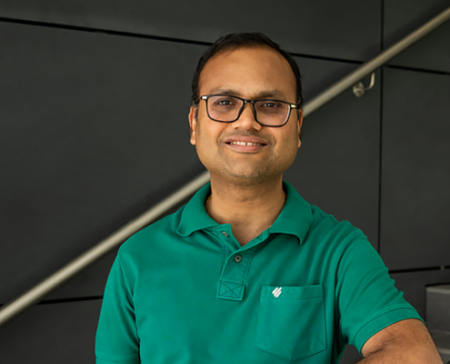
Bc. Ivana Hanáková

Main Objectives

  1. Establishment of clinical grade (GMP quality) lines of human embryonic stem cells and their functional evaluation.
  2. Understanding and manipulating biological properties of different types of human pluripotent stem cells (tissue, embryonic, induced) that are relevant to their safe application in clinics.

Research focus

We investigate the properties of different types of human stem cells that are relevant to their utility in biomedicine

Particular focus is on pluripotent stem cells, both embryonic and induced, but adult stem cell types are also studied. The biological phenomena that are being studied mainly include:

genetic and genomic stability of stem cells because of its importance to safety in potential clinical applications

role of cell cycle regulators and non-coding RNAs in establishing and maintenance of differentiated phenotypes and also in pluripotency

effects of extracellular biodomains on behavior of stem cells, with an emphasis on their contribution to establishment of niche environment.

Great effort is also dedicated to:

development of methodologies for supporting growth of cells in engineered biocompatible scaffolds

differentiation of stem cells towards defined somatic cell lineages (e.g. airway epithelia, neural crest derivatives).

development of technologies important for production of cell products under cGMP standards

Lastly, the group is involved in setting standards and rules related to ethical and safe use of stem cells in clinics, via its participation in International Stem Cell Forum and International Stem Cell Banking Initiative, Karolinska Institutet, Stockholm, Sweden, University of Newcastle, Newcastle, UK and Stem Cell Institute, MRC, Cambridge, UK


Technological equipment

  • BioScaffolder 3.1 (GESIM, Germany)  – printing of wide variety of 3D structures in micrometer dimensions, also with live cells.
  • VEVO 2100 – high-frequency, high-resolution digital imaging platform with linear array technology and Color Doppler Mode for small animals.
  • ImageXpress Micro XL (Molecular Devices, USA) – epifluorescence live cell imaging microscopy with high content screening capability.

Selected Results

  • Kotasova, H., M. Capandova, V. Pelkova, J. Dumkova, Z. Koledova, J. Remsik, K. Soucek, Z. Garlikova, V. Sedlakova, A. Rabata, P. Vanhara, L. Moran, L. Pecinka, V. Porokh, M. Kucirek, L. Streit, J. Havel and A. Hampl (2022). “Expandable Lung Epithelium Differentiated from Human Embryonic Stem Cells.” Tissue Eng Regen Med.
  • Lenart, S., P. Lenart, L. Knopfova, H. Kotasova, V. Pelkova, V. Sedlakova, O. Vacek, J. Pokludova, V. Can, J. Smarda, K. Soucek, A. Hampl and P. Benes (2022). “TACSTD2 upregulation is an early reaction to lung infection.” Sci Rep 12(1): 9583.
  • Vazquez-Gomez, G., M. Karasova, Z. Tylichova, M. Kabatkova, A. Hampl, J. Matthews, J. Neca, M. Ciganek, M. Machala and J. Vondracek (2022). “Aryl Hydrocarbon Receptor (AhR) Limits the Inflammatory Responses in Human Lung Adenocarcinoma A549 Cells via Interference with NF-kappaB Signaling.” Cells 11(4).
  • Weissova, K., B. Fafilek, T. Radaszkiewicz, C. Celiker, P. Machackova, T. Cechova, J. Sebestikova, A. Hampl, V. Bryja, P. Krejci and T. Barta (2022). “LuminoCell: a versatile and affordable platform for real-time monitoring of luciferase-based reporters.” Life Sci Alliance 5(8).
  • Golunova, A., N. Velychkivska, Z. Miksovska, V. Chochola, J. Jaros, A. Hampl, O. Pop-Georgievski and V. Proks (2021). “Direct and Indirect Biomimetic Peptide Modification of Alginate: Efficiency, Side Reactions, and Cell Response.” Int J Mol Sci 22(11).
  • Kolarova, H., J. Vitecek, A. Cerna, M. Cernik, J. Pribyl, P. Skladal, D. Potesil, I. Ihnatova, Z. Zdrahal, A. Hampl, A. Klinke and L. Kubala (2021). “Myeloperoxidase mediated alteration of endothelial function is dependent on its cationic charge.” Free Radic Biol Med 162: 14-26.
  • Souralova, T., Z. Holubcova, D. Kyjovska, A. Hampl and I. Koutna (2021). “Xeno- and feeder-free derivation of two sex-discordant sibling lines of human embryonic stem cells.” Stem Cell Res 57: 102574.
  • Trebichalska, Z., J. Javurek, M. Tatickova, D. Kyjovska, S. Kloudova, P. Otevrel, A. Hampl and Z. Holubcova (2021). “High-Resolution 3D Reconstruction of Human Oocytes Using Focused Ion Beam Scanning Electron Microscopy.” Front Cell Dev Biol 9: 755740.
  • Trebichalska, Z., D. Kyjovska, S. Kloudova, P. Otevrel, A. Hampl and Z. Holubcova (2021). “Cytoplasmic maturation in human oocytes: an ultrastructural study dagger.” Biol Reprod 104(1): 106-116.
  • Ventruba, P., J. Zakova, M. Jeseta, E. Lousova, A. Hampl, T. Souralova and I. Koutna (2021). “Aspects of embryo selection and their preparation for the formation of human embryonic stem cells intended for human therapy.” Ceska Gynekol 86(1): 5-10.