Our team investigates fundamental mechanisms and translates findings from bench to bedside, combining preclinical models with clinical insight.
Researcher at ICRC with focus on translational medicine. Combines preclinical insights with clinical practice across cardiology, neurology, and oncology programs.
Currently leads / contributes to interdisciplinary projects bridging molecular biology, imaging, and patient care at St. Anne's University Hospital Brno.
Description of the role of TLR receptors in acute immune response, chronic inflammation, and tissue regeneration using immune cells and mucosal tissue 3D organoids.
Characterization of dynamic changes of the immune system during onset and progression of septic shock. Long-term changes in the immune system caused by septic shock.
Describe molecular crosstalk between innate immune signalling and metabolic changes in myeloid cells.
Describe the mechanisms responsible for the onset of innate immune memory as a tool to reduce the susceptibility of patients to respiratory infections.
Develop translational research in the field of immunosenescence and inflammaging through analysis of various cohorts of elderly, patients with chronic inflammatory disorders, and children cancer survivors.
The mechanism controlling the activation of the immune system in chronic inflammation (e.g. Crohn’s disease)
Research focus
The group focuses on different aspects of the human immune response and on how the underlying mechanisms of immunity are linked with the development of disorders and pathologies. The main objectives are addressing i) the role of the immune response in the progression of sepsis and septic shock, including the study of long-term consequences; (ii) studying the aging of the immune system and characterizing the immunosenescent phenotype in a number of cohorts of patients, including oncological diseases survivors or in patients with neurodegenerative diseases or chronic cardiovascular problems; (iii) 3D models of human mucosal tissues enabling the study of the immune response in the microenvironment; (iv) immune cell signaling, in particular the role of the calcineurin-NFAT pathway in the development of susceptibility to infections; (v) immunometabolism as a controlling mechanism of the immune response. Our thigh collaboration with clinicians creates the opportunity to perform basic research with a strong translational approach from the bench to the bedside approach.
Main partners of the CMI group: Department of Pathophysiology, Third Faculty of Medicine, Charles University in Prague, Czech Republic; Veterinary Research Institute, Brno; Institute of Hematology and Blood Transfusion in Prague; Czech Centre for Phenogenomics, Institute of Molecular Genetics, Prague; Central European Institute of Technology, Brno; University of Perugia, Italy; Latvian Institute of Organic Synthesis, Riga
Technological equipment
Flow Cytometry Facility – mastering the complexity of cell analysis and isolation (MoFlo Astrios, Spectral cytometry SONY SA3800)
Magnetic Cell Separator (AutoMACS, Miltenyi) – automatic and fast high purity enrichment of cell subsets
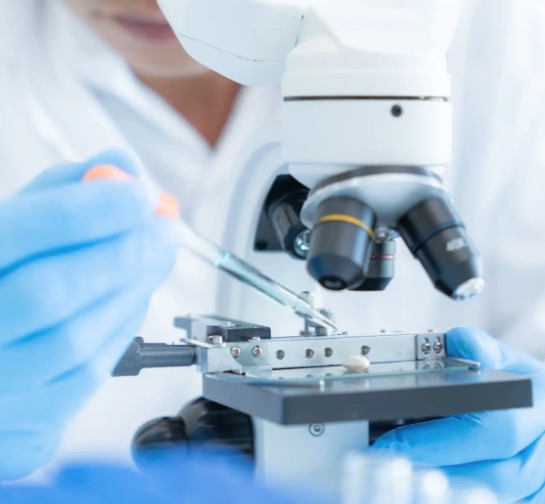
Multiphoton Microscope – analysis of full thickness tissues explants and 3D cultures
Confocal Laser Scanning Microscope suited for live imaging
Selected Results
The CMI has published a series of papers in prestigious journals (Mucosal Immunology, Cell Reports, EMBO Molecular Medicine and Leukemia) showing the important mechanisms of myeloid cell development and immune protection against various pathogens. The CMI group has shown that immunosuppressive drugs (such as Cyclosporine A or Tacrolimus) affect the function of the calcineurin NFAT signaling pathway in myeloid cells and their precursors, which causes dysregulation of myelopoiesis and increased susceptibility to infections. These results are important for understanding the complications associated with immunosuppressive therapies.
Selected publications include:
Lázničková P et al: Childhood survivors of high-risk neuroblastoma show signs of immune recovery and not immunosenescence. Eur J Immunol.2020 Aug 3. doi: 10.1002/eji.202048541.
Hortová-Kohoutková M et al: Phagocytosis-inflammation Crosstalk in Sepsis: New Avenues for Therapeutic Intervention. Shock.2020 Jun 8. doi: 10.1097/SHK.0000000000001541
Bendíčková K et al: Roles of IL-2 in bridging adaptive and innate immunity, and as a tool for cellular immunotherapy. J Leukoc Biol.2020 Jul;108(1):427-437. doi: 10.1002/JLB.5MIR0420-055R.
Jose SS et al: Comparison of two human organoid models of lung and intestinal inflammation reveals Toll-like receptor signalling activation and monocyte recruitment. Clin Transl Immunology.2020 May 5;9(5):e1131. doi: 10.1002/cti2.1131.
Bendíčková K et al: Calcineurin inhibitors reduce NFAT-dependent expression of antifungal pentraxin-3 by human monocytes. J Leukoc Biol.2020 Mar;107(3):497-508. doi: 10.1002/JLB.4VMA0318-138R.
Mencarelli A et al: Calcineurin-mediated IL-2 production by CD11chighMHCII+ myeloid cells is crucial for intestinal immune homeostasis. Nat Commun. 2018 Mar 16;9(1):1102. doi: 10.1038/s41467-018-03495-3.
Bendíčková K et al: Calcineurin-NFAT signalling in myeloid leucocytes: new prospects and pitfalls in immunosuppressive therapy. EMBO Mol Med.2017 Aug;9(8):990-999. doi: 10.15252/emmm.201707698.
Zelante T et al: Impaired calcineurin signaling in myeloid cells results in downregulation of pentraxin-3 and increased susceptibility to aspergillosis. Mucosal Immunol.2017 Mar;10(2):470-480. doi: 10.1038/mi.2016.52.